
Pacific Iron Products
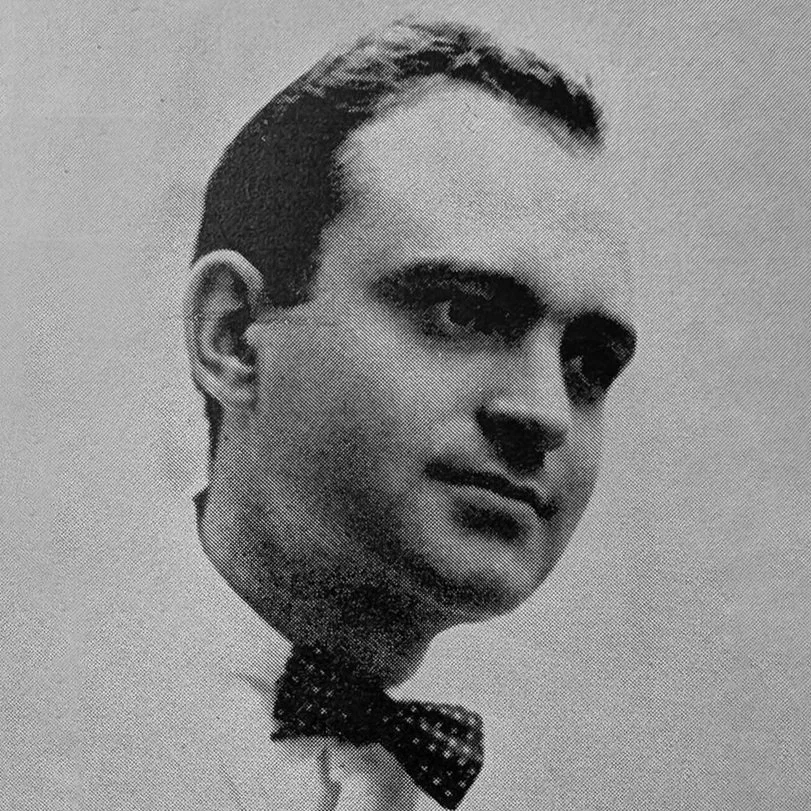
Stanford L. Optner
At just 26 years old, Stanford L. Optner (1920–2017) made a move that would place him at the center of postwar California design. Trained as an industrial engineer and educated at Harvard Business School, Optner combined his technical training with entrepreneurial vision when he acquired and transformed a small South Pasadena firm into Pacific Iron Products. What began as a modest wrought-iron furniture company would soon help define the indoor-outdoor optimism of mid-century American interiors.
Optner, the founder of Pacific Iron Products, was born in Chicago. In 1942, he moved to Tucson, Arizona, where he worked at Convair as an industrial engineer specializing in plant layout. After the war, with a child on the way, he moved to Los Angeles in 1945 to work as the Chief Industrial Engineer at Super Cold Corporation.
In July 1946, he decided to go into business for himself and purchased a small outdoor furniture company called Live-In-The-Sun Co. It was located at 1015 El Centro in South Pasadena. Stanford renamed the company Pacific Iron Products. At 26 years old, he was the sole owner of the firm, and one article noted that he was without financial backing and operating with “...merely courage and an idea.”
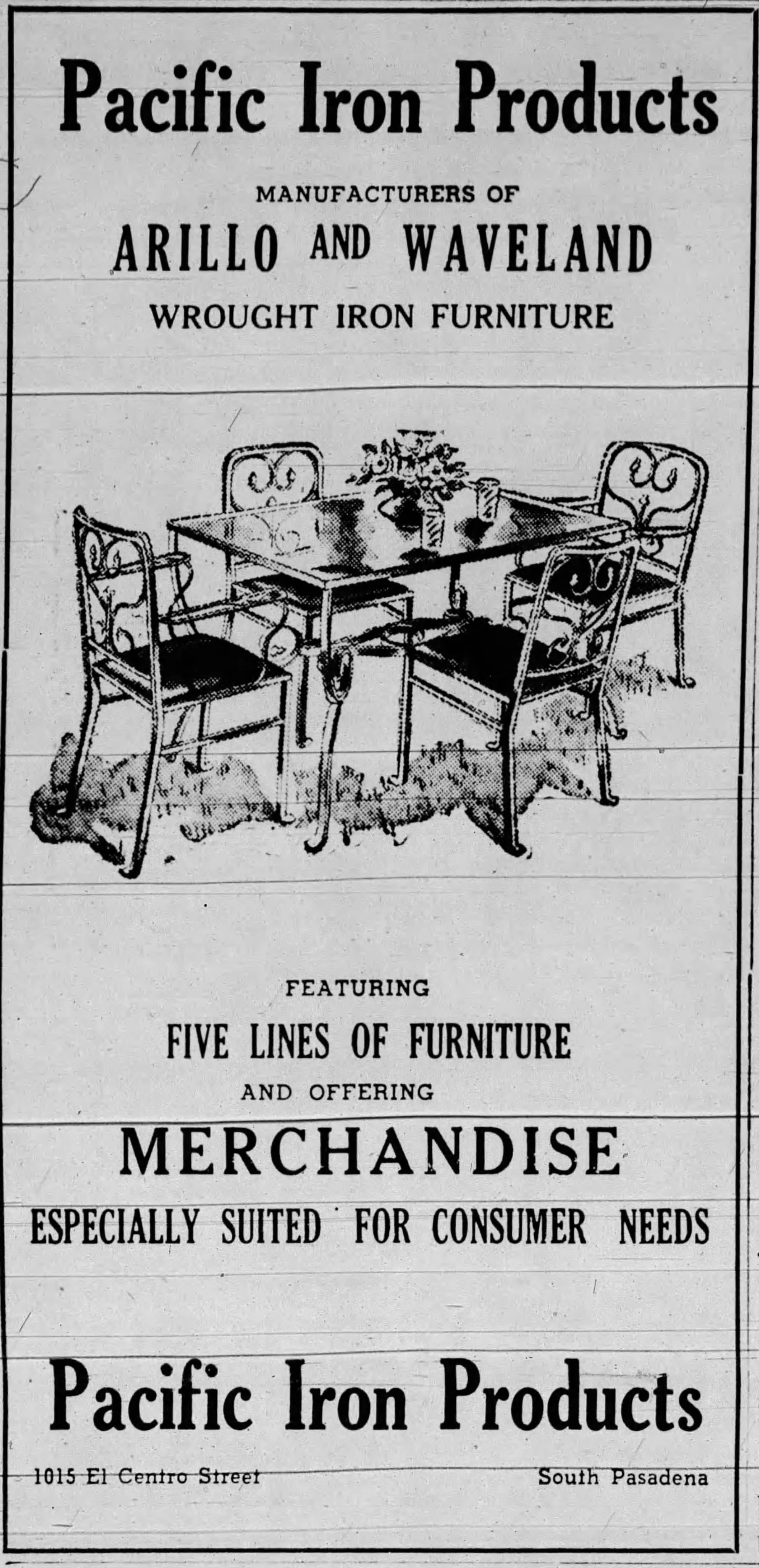
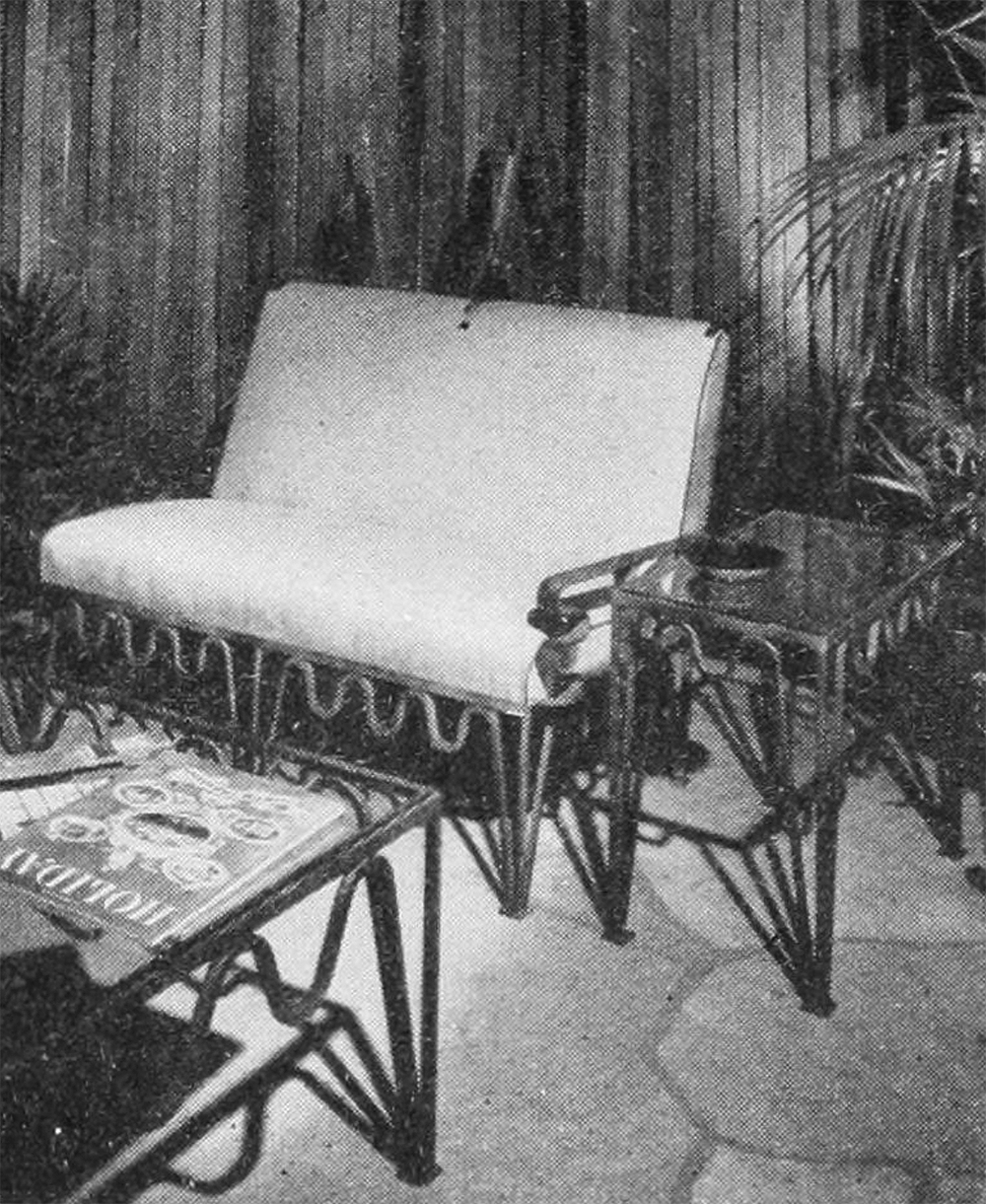
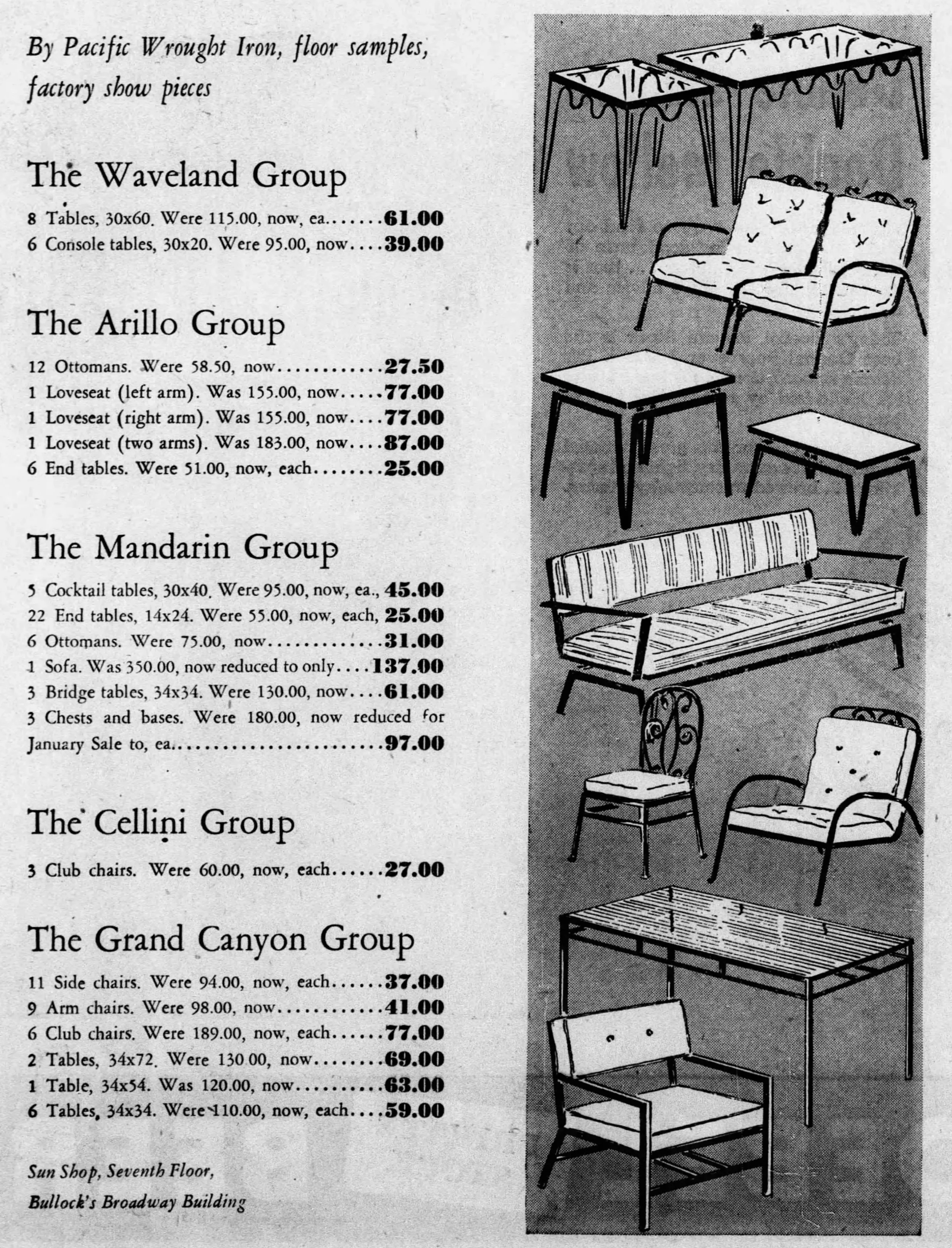
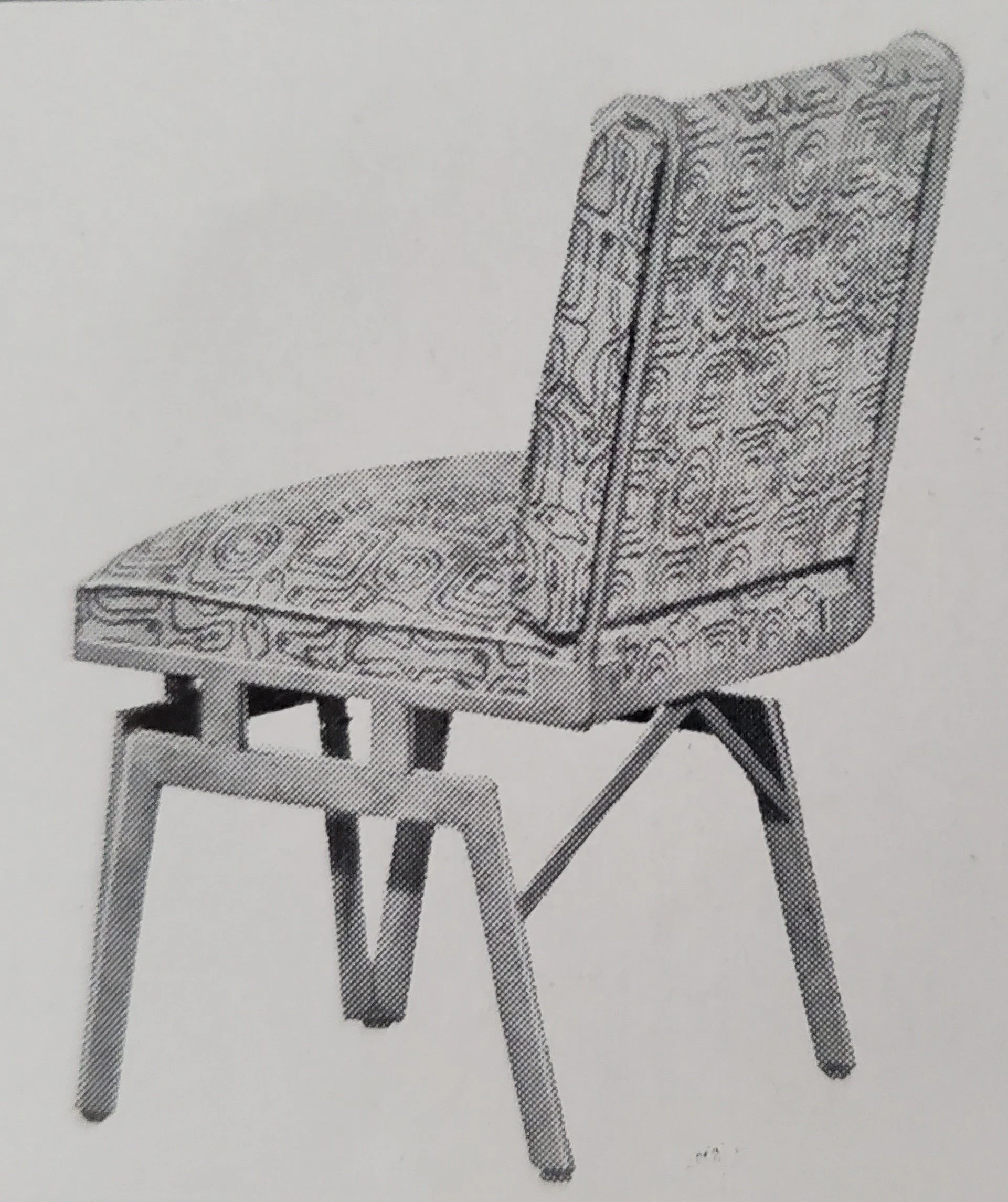
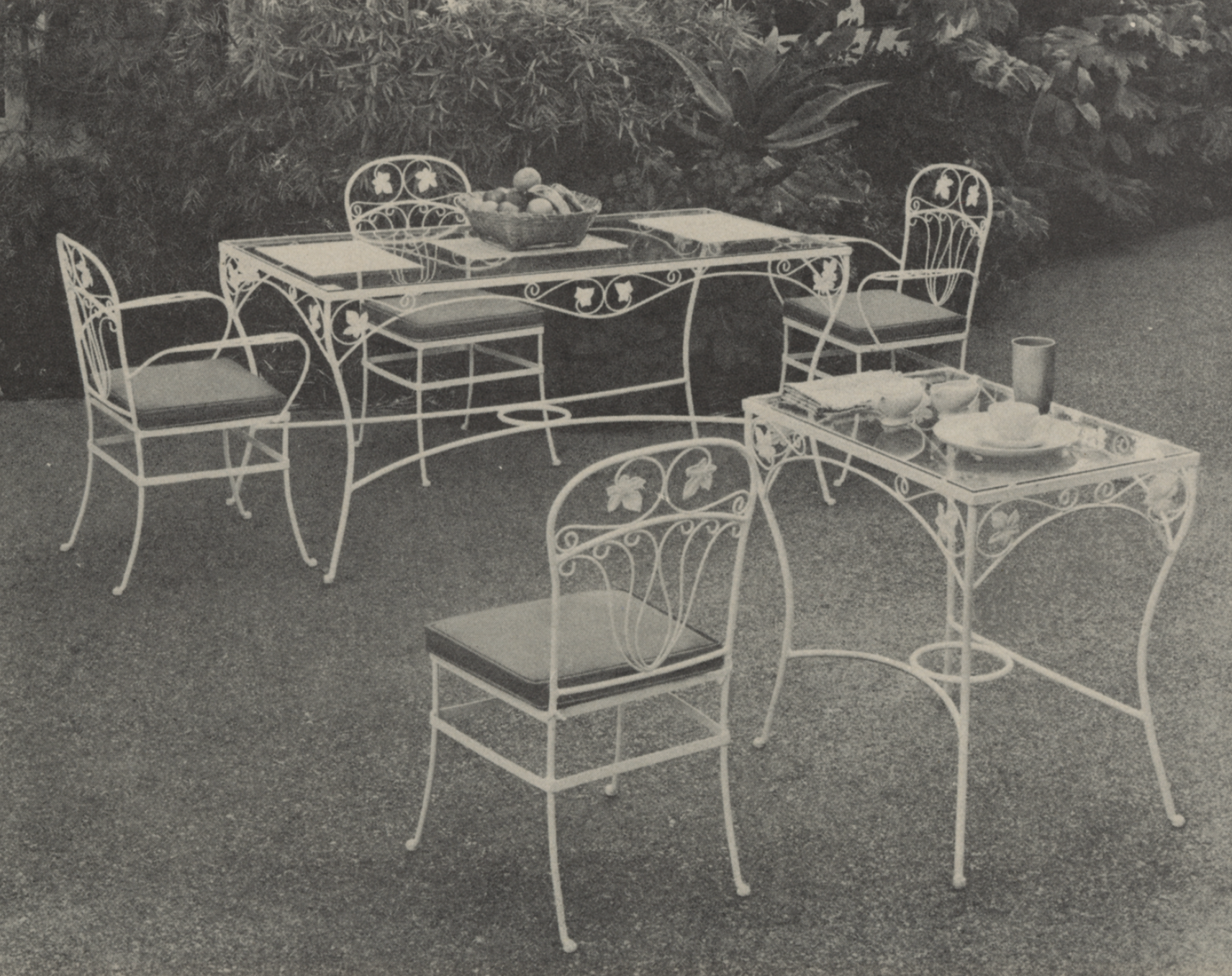
He designed and manufactured his own line of iron furniture to fill what he saw as an aesthetic and practical need in the market. The first offerings consisted of five groups, most of which incorporated decorative and ornate design elements most would never associate with the company. “Arillo” included cutout leaf decorations and scrolled elements, as did “Cellini.” “Waveland” was launched in 1947 and utilized undulating lines of rectangular steel stock. “Mandarin,” which is often misattributed to Walter Lamb, was also part of this era of designs. At this point, “Grand Canyon” was the most modern-looking, with simple straight lines. Some of the tabletops from this series included tiles hand-painted by Claude Marks and another artist known as Jay.
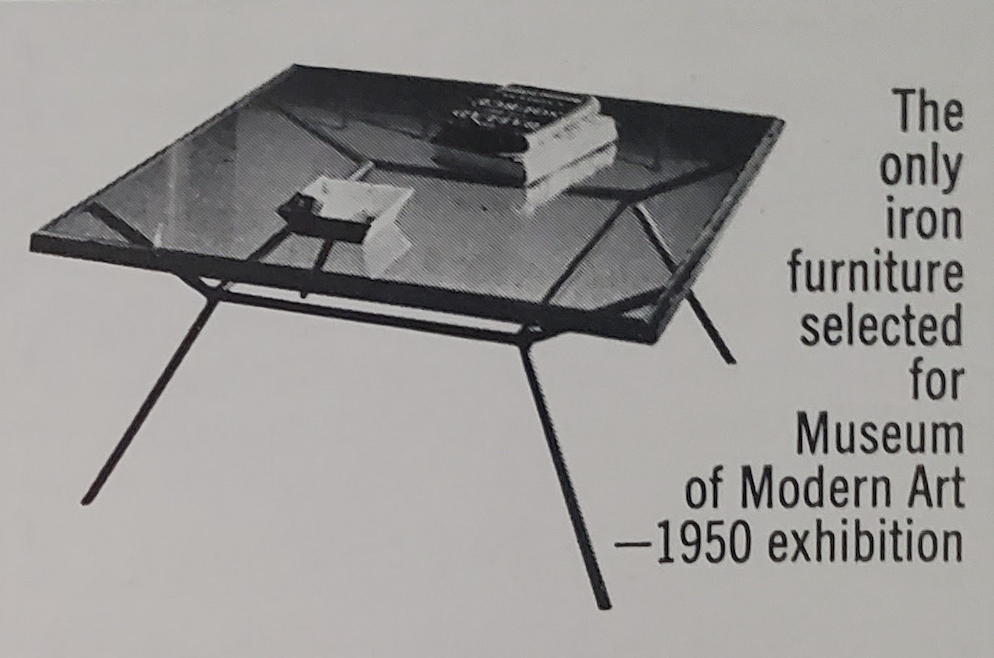
In 1948, the company needed more space and moved from South Pasadena to West Los Angeles. At this point, Pacific Iron Products began evolving from in-house-designed ornate wrought iron to cutting-edge modern lines created in collaboration with well-known designers. Milo Baughman, Paul Laszlo, John Keal, Painter, Petertil & Teague, and even Edward Frank of Frank Bros. all designed their own groups consisting of seating, tables, and, in the case of Keal, shelving. The new production would earn multiple MoMA Good Design selections for the company. Designed in 1950, the “Beachcomber” lounger by Chicago-based industrial designers David Painter, Victor Petertil, and James Teague was selected for Good Design in 1952. The same team is credited with designing the world’s first transistor radio, the TR-1. Baughman’s designs from the “Californian” and “Palisades” groups were also selected for Good Design. As one ad states, it was the only iron furniture selected by MoMA for that year.
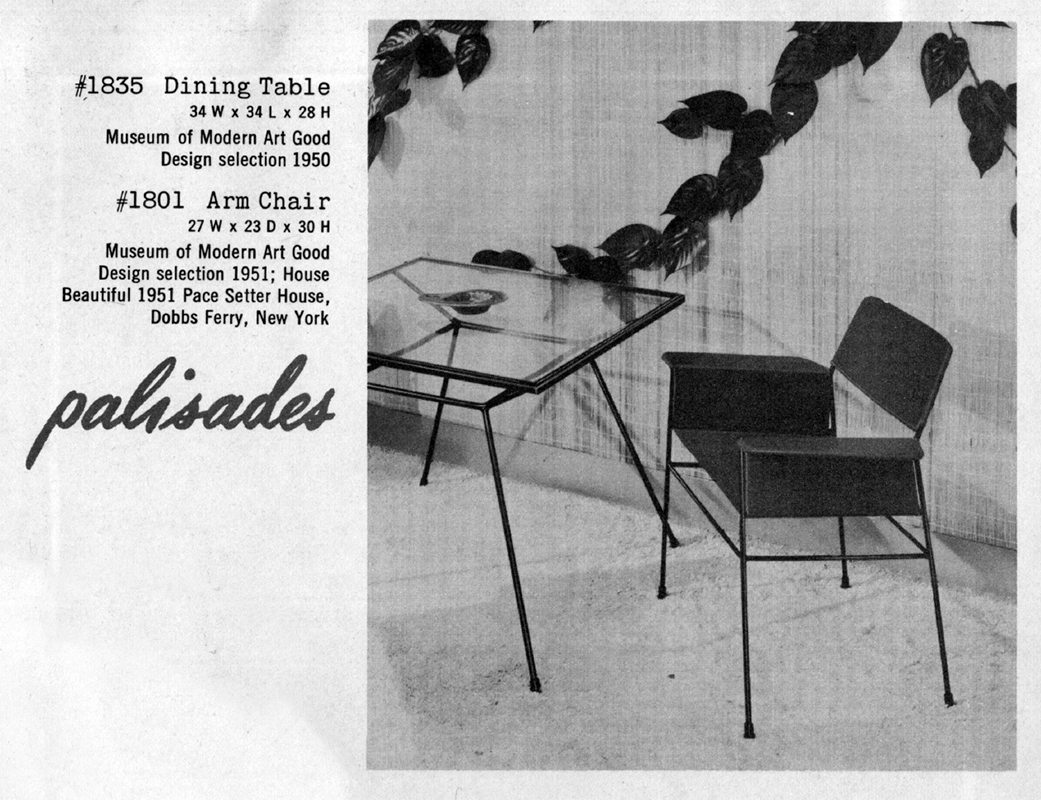
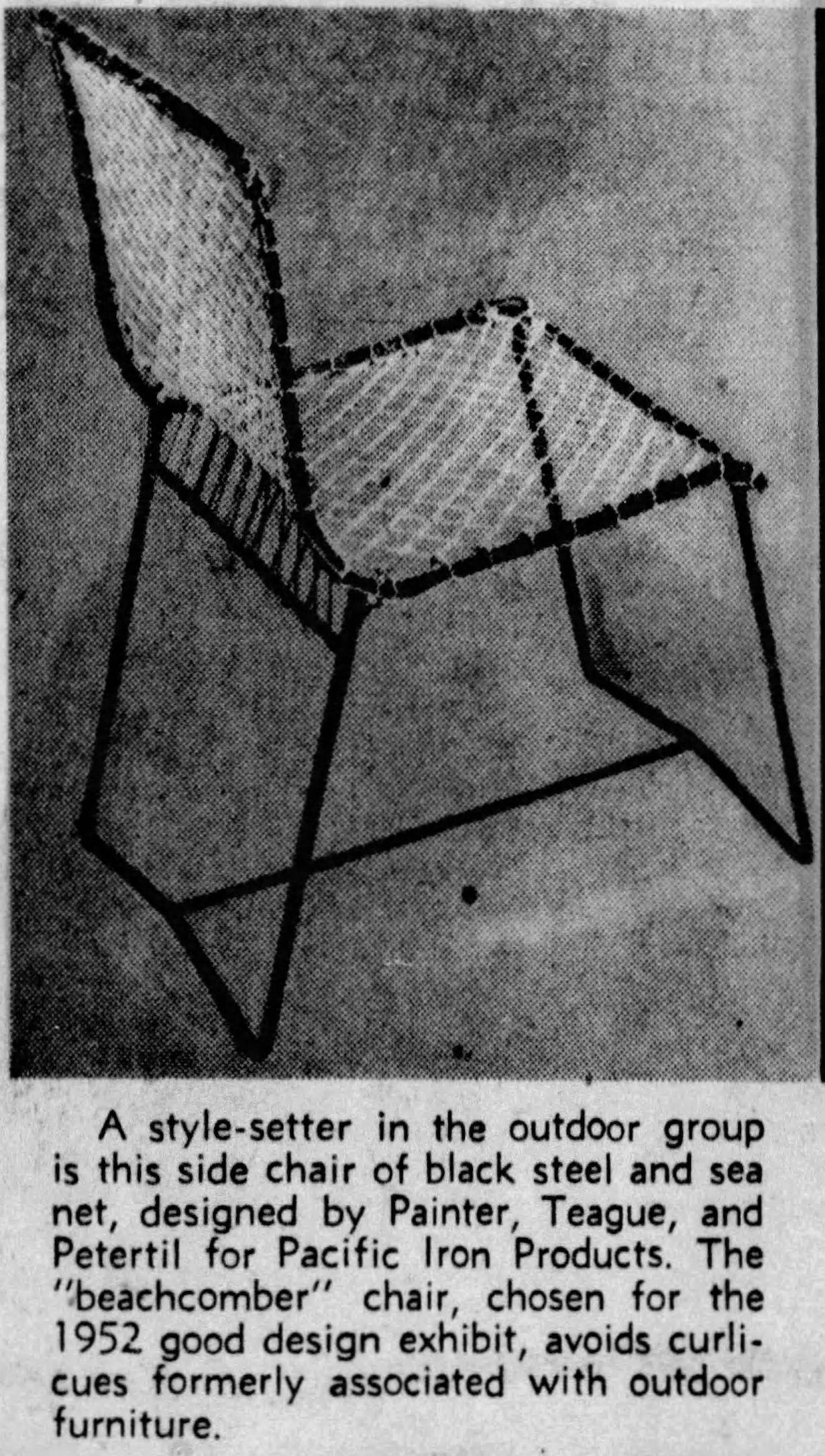
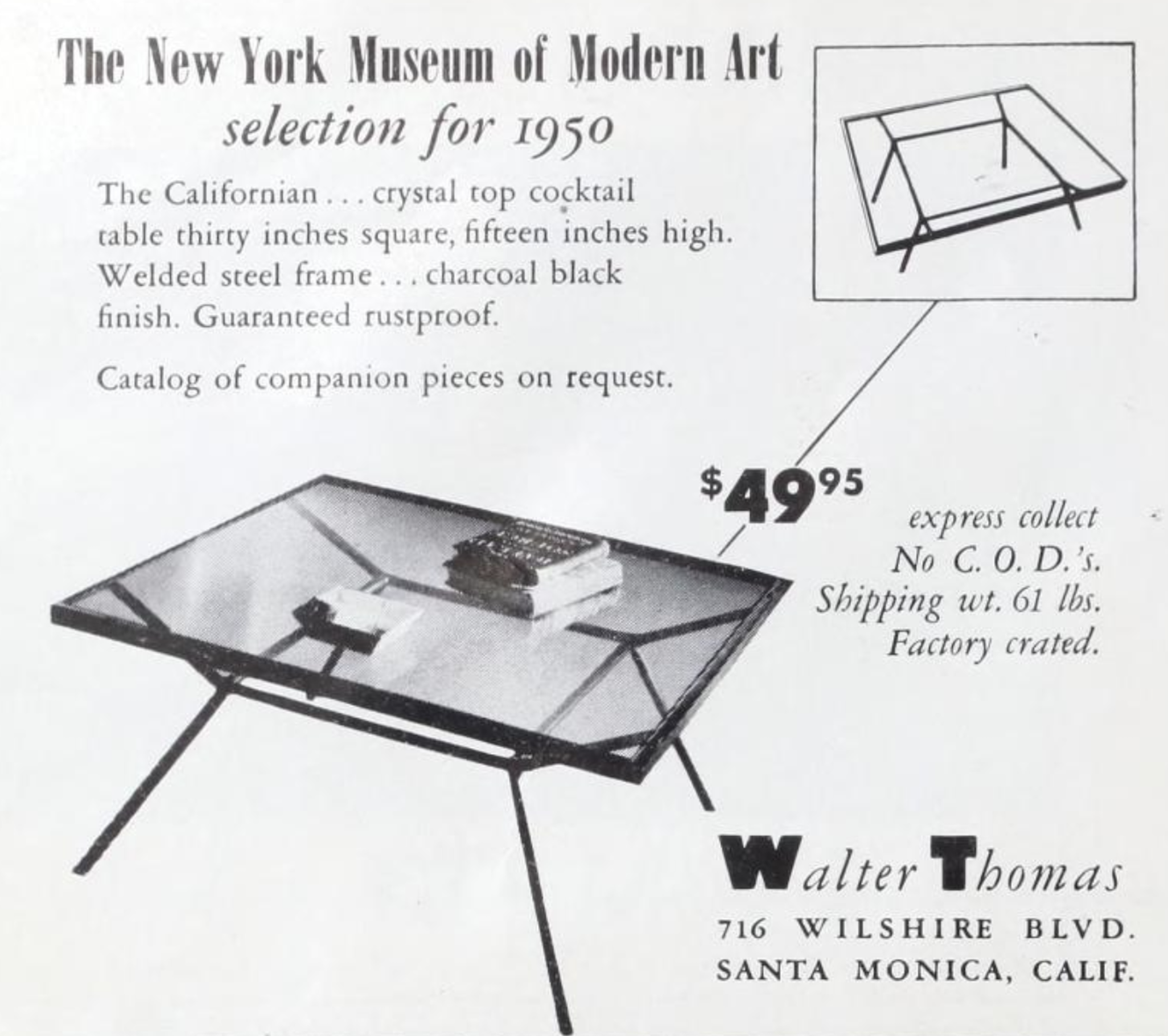
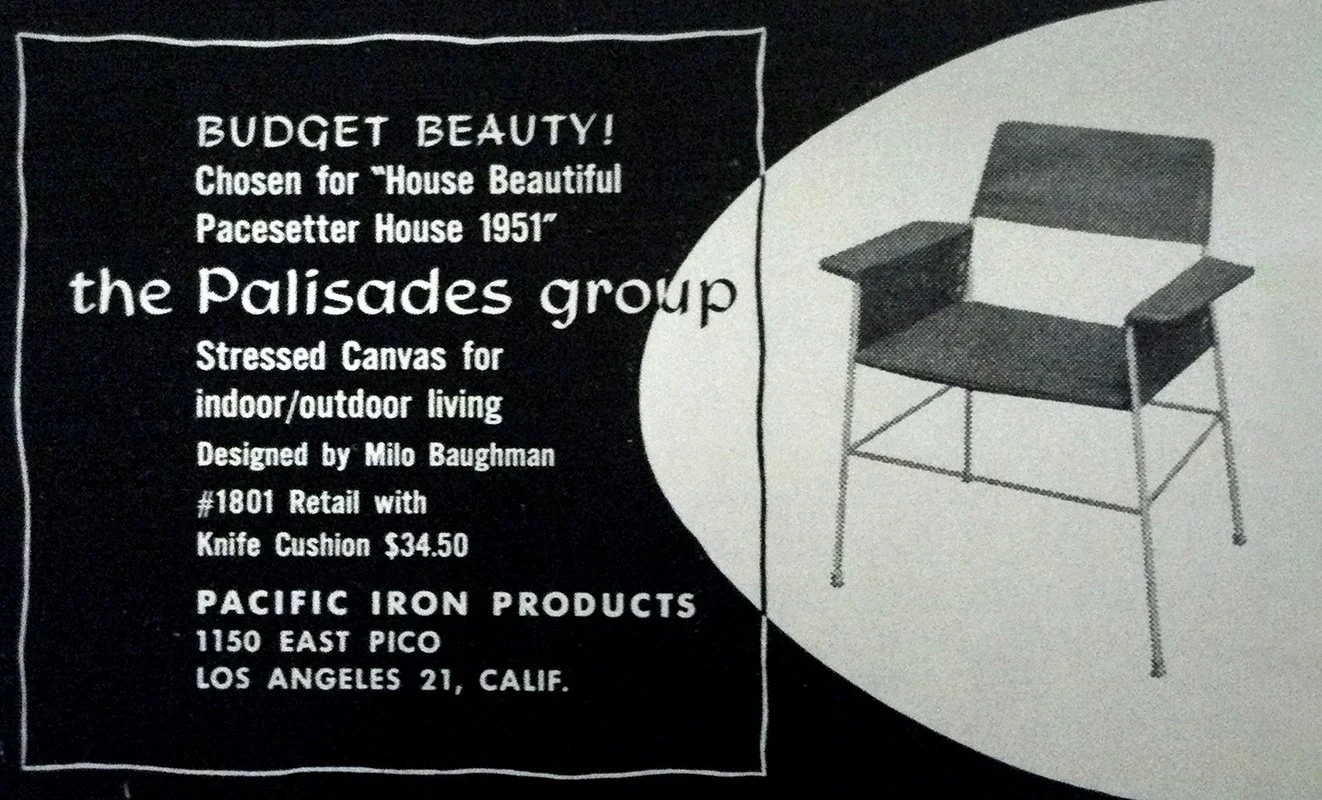

The early 1950s brought Pacific Iron national notoriety. The company was included in the House Beautiful Pace Setter House and the 1952 Pacifica promotion by House & Garden. Julius Shulman was hired in 1950 and 1952 to do product photography for the company. Shulman also ended up with multiple Pacific Iron pieces in his own house, which was designed by Raphael Soriano. Optner continued to serve as president but was also a major salesperson. In 1951, he met with Mies van der Rohe at his office in Chicago to review the new Pacific Iron lines. The Metropolitan Museum of Art sent a letter to Optner about possibly ordering 400 to 500 “Californian” chairs for its restaurant. One could speculate that the name pushed East Coast buyers in a different direction, because the Met ultimately selected the much more decorative “Dorotheum” by Dorothy Draper.
As a Harvard Business School graduate, Optner took an analytical approach to his operation. Before any product or line was launched, he studied the competition to determine what problem it could solve. Each group also had a different price point to meet the needs of different consumers. The company maintained sales representatives nationwide and internationally, with representation in Mexico, the Philippines, and China. This all equated to strong sales and a rapidly growing company that needed more capacity.
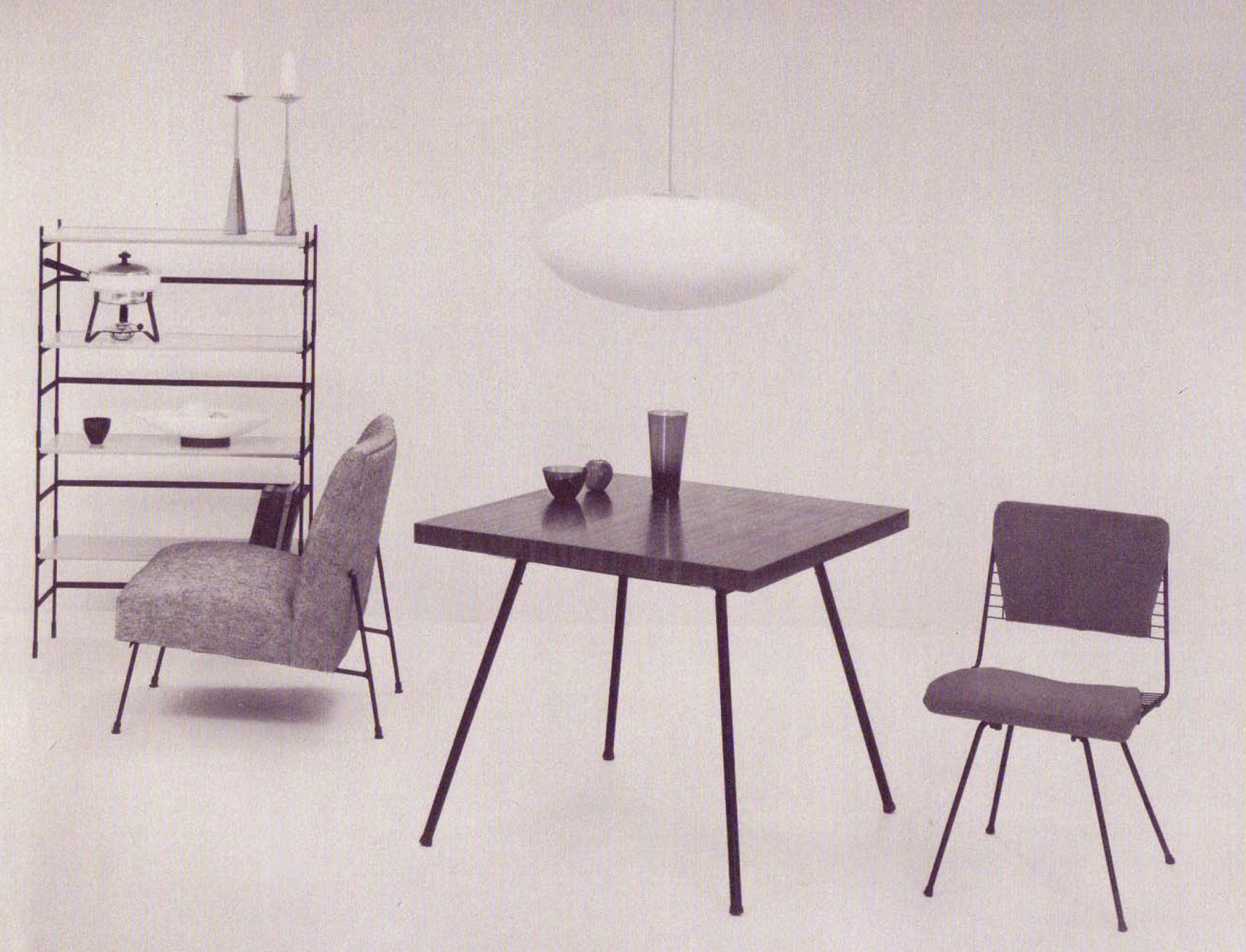
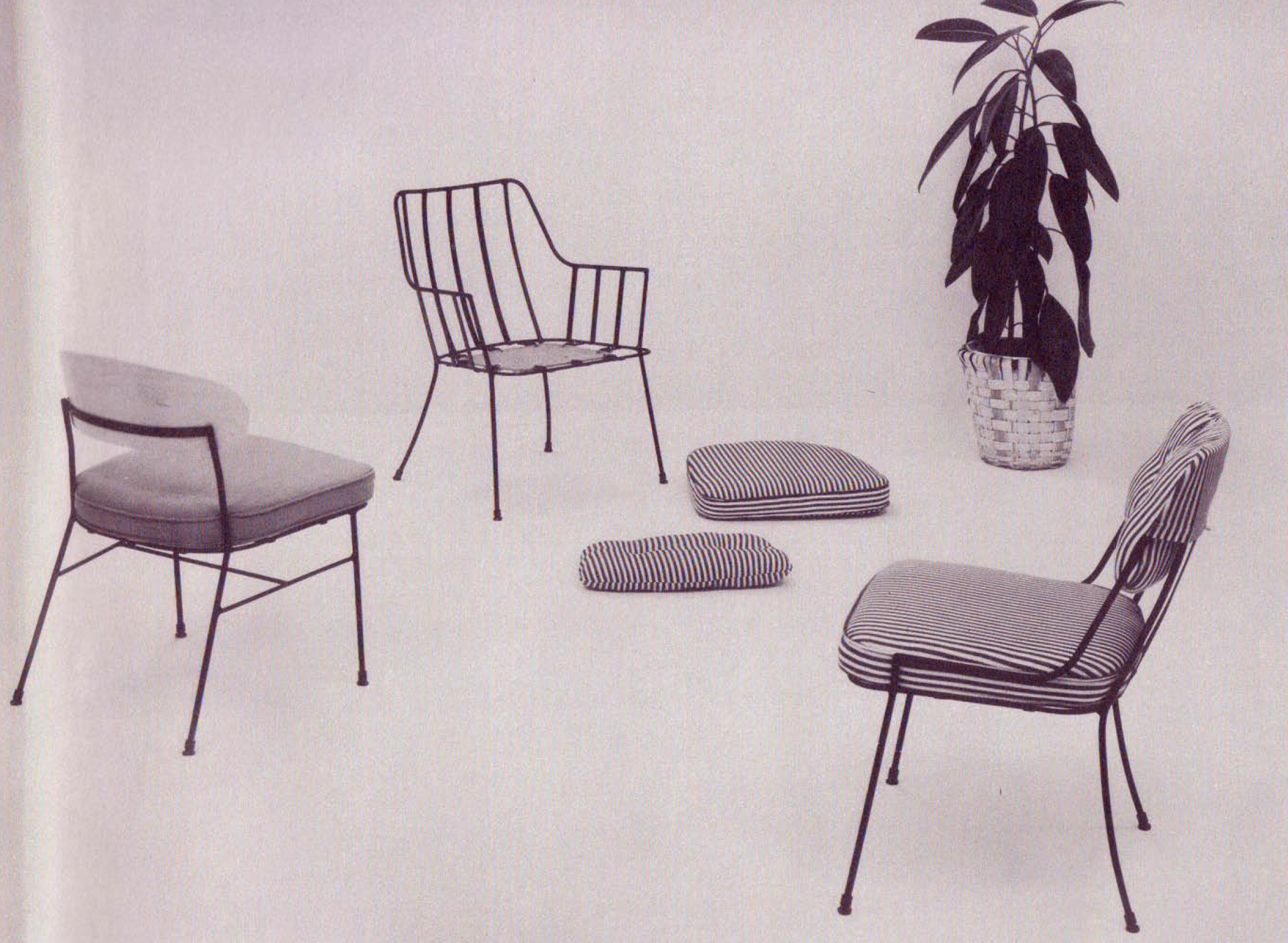
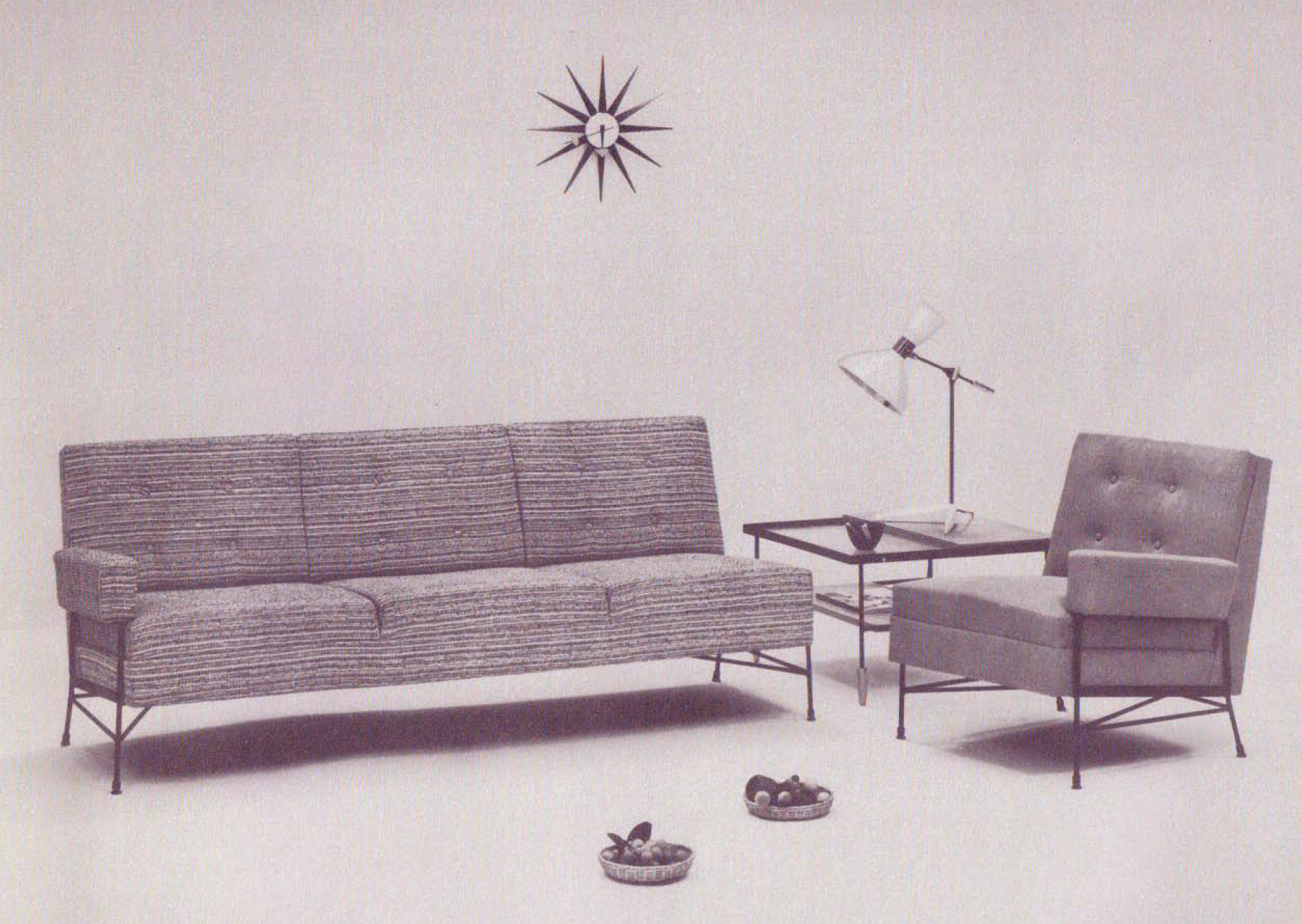
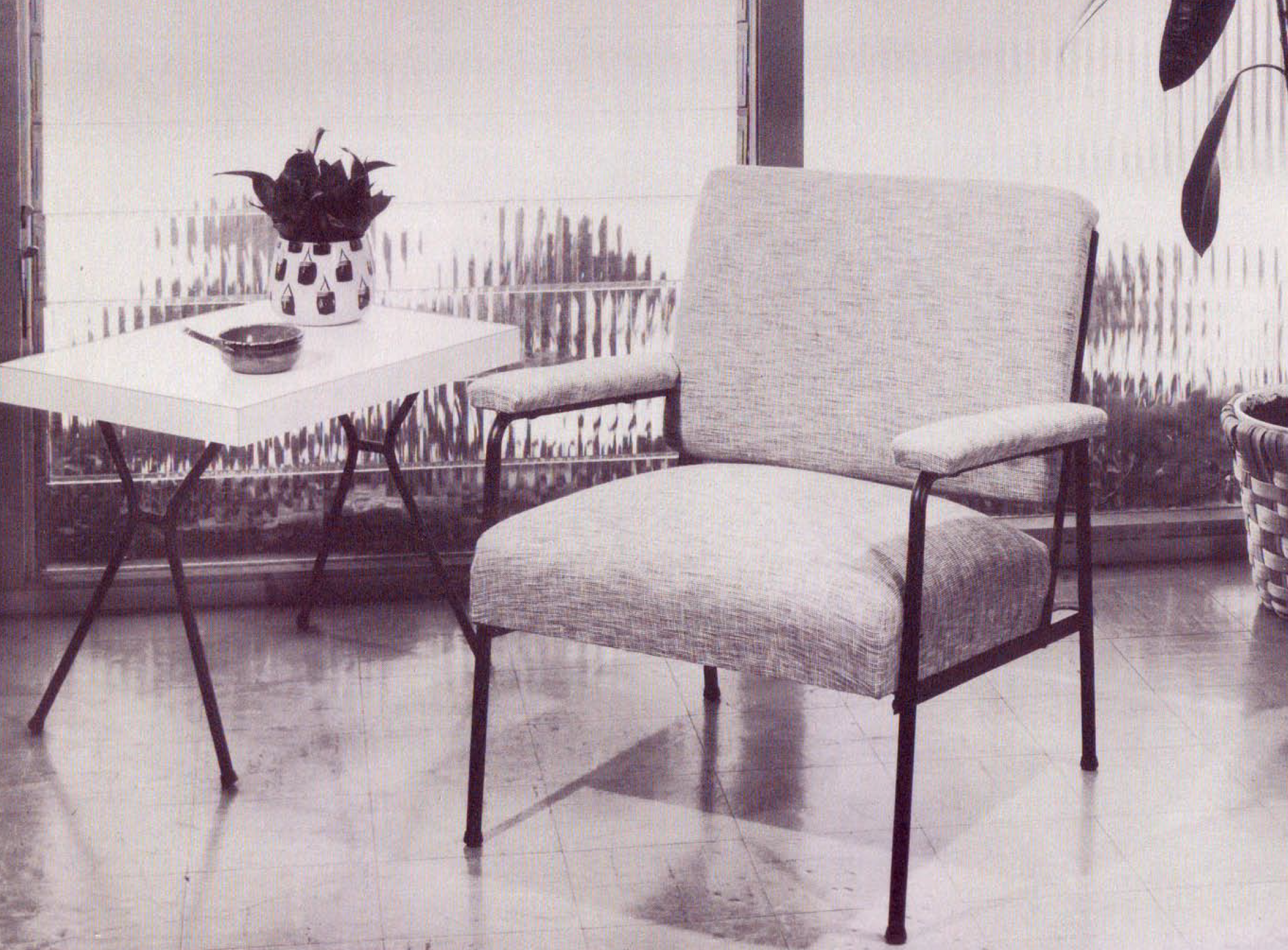
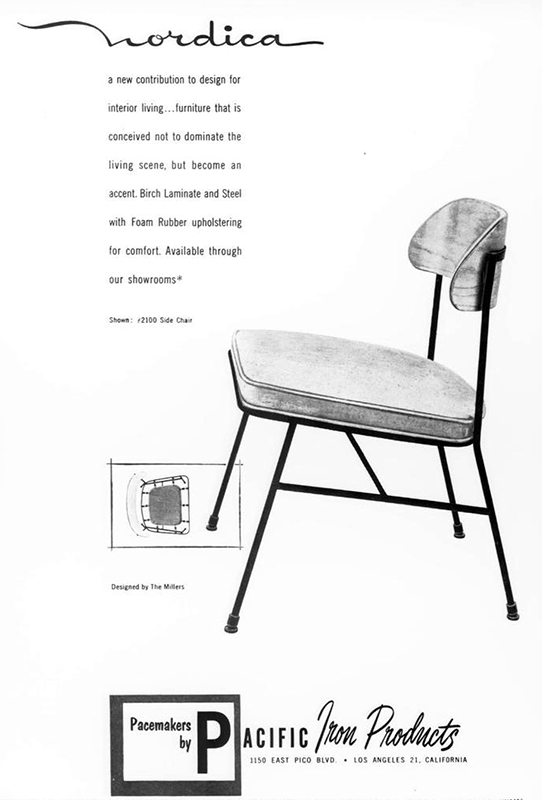
In 1952, the company completed a ground-up construction of a new 14,000-square-foot Westside factory at 11930 W. Olympic Blvd. The brick building was designed by architect Frank W. Miller, who also designed the “Nordica” line of furniture in collaboration with Optner. “Nordica” is often misattributed to Paul Laszlo, despite multiple advertisements stating it was designed by the Millers. At this time, John Keal was the overall design coordinator for the company in addition to designing the “Advanced Design,” “Westholme Group,” and “Interior Living” lines. Keal was also instrumental in streamlining production. Optner said of him, “He gets in front and leads and also gets in the back and pushes.” The new facility housed a showroom, production, sales and upholstering departments, steel fabrication, shipping, and a warehouse.
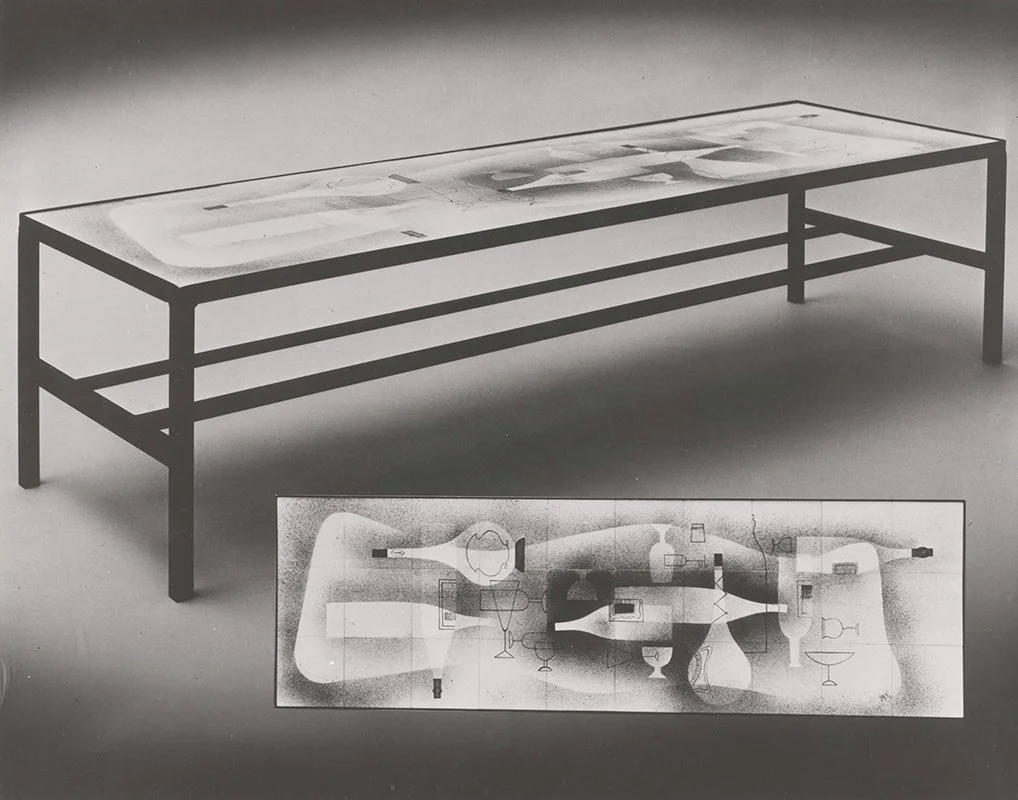
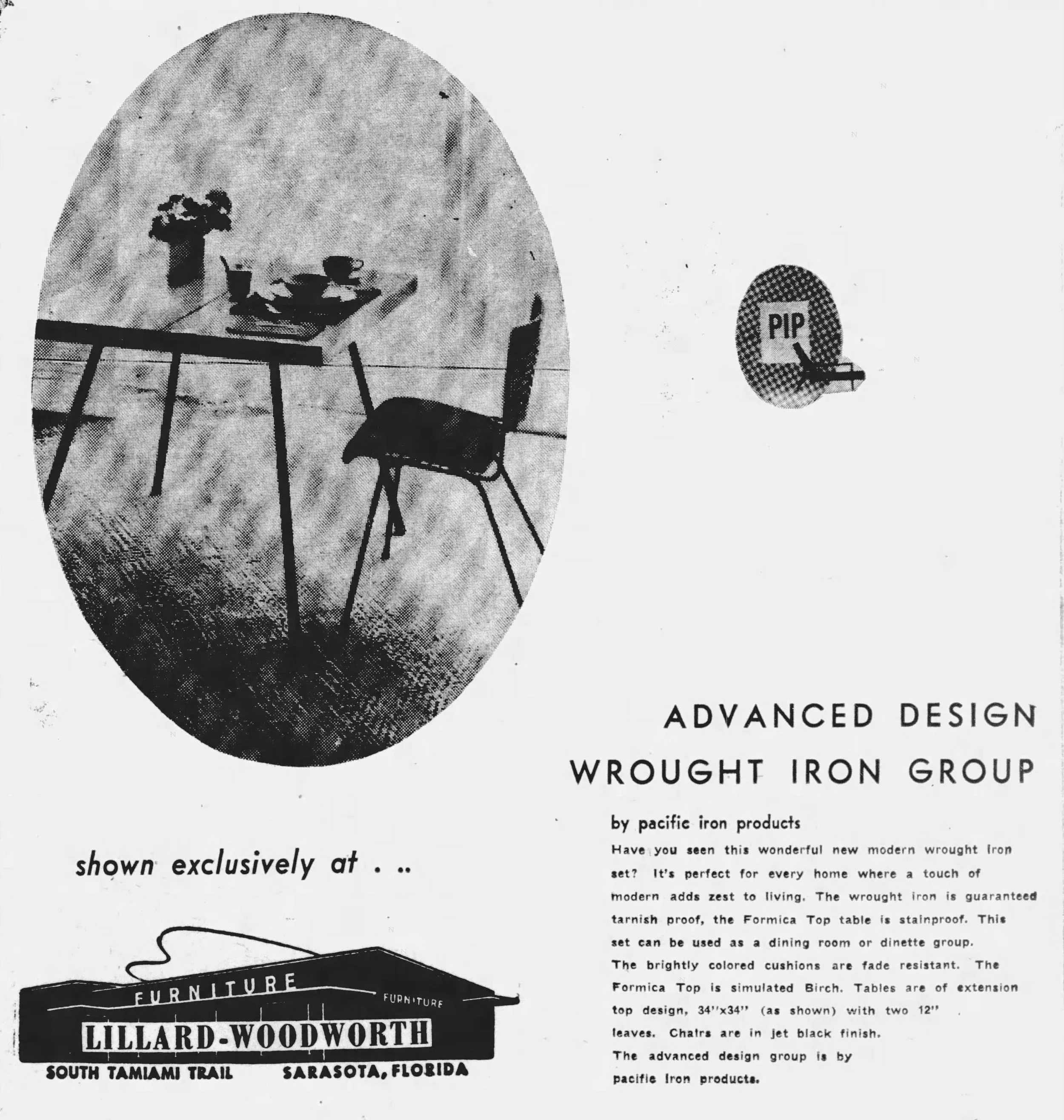
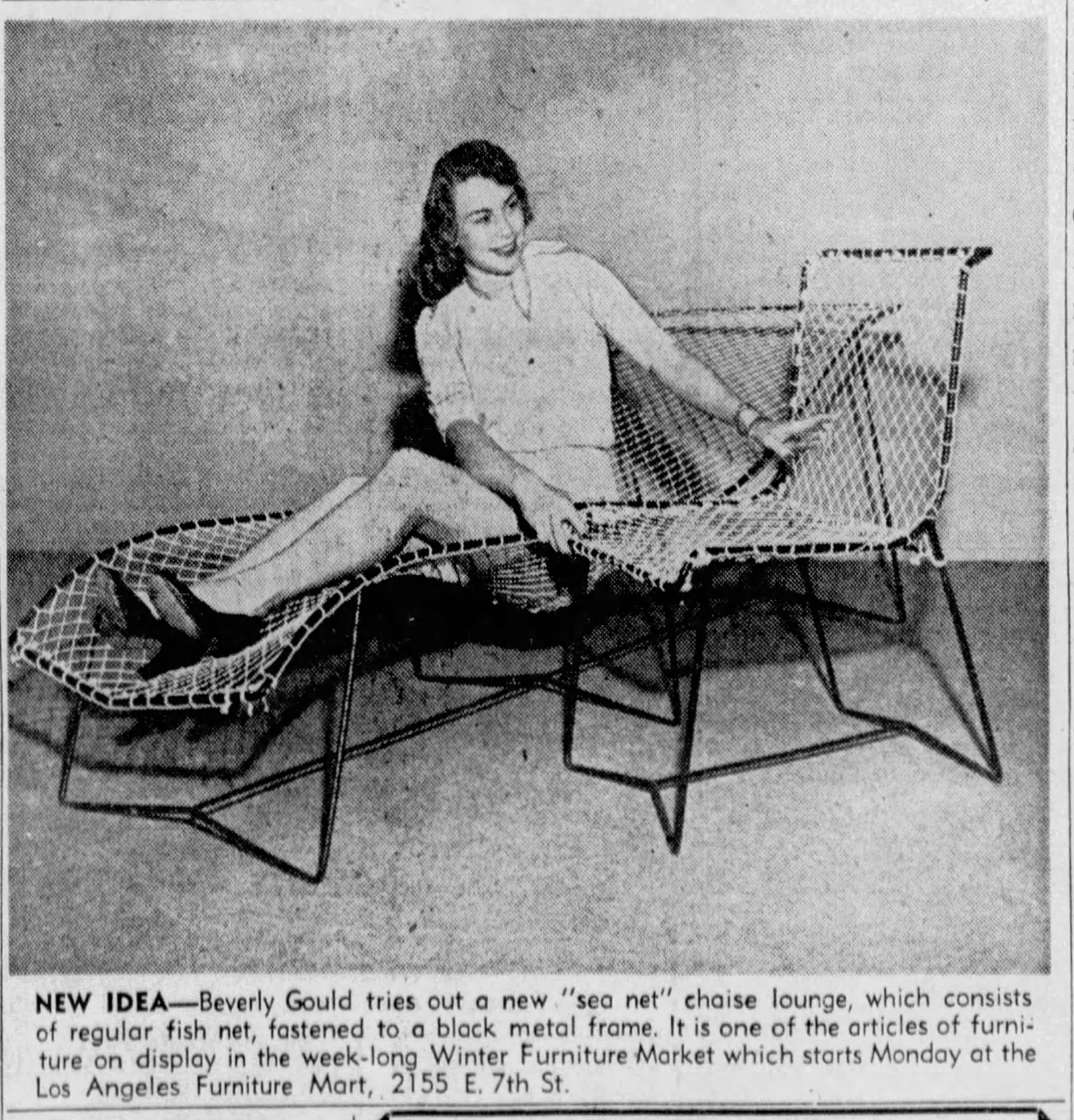
The “Malaya” group was announced in 1955, as was “Skylark,” which was designed by Edward Frank. It was a fully upholstered living room series introduced by Pacific Iron Products’ new subsidiary, the Gordon Stanford Division. The new firm was established to manufacture “...fine contemporary upholstered furniture and occasional pieces.” This shift seemed to signify that iron furniture was falling out of fashion. The reorganization may have been a last-ditch effort to save the company because, despite the accolades, strong design legacy, and architectural collaborations, Pacific Iron Products ceased operations in 1955. In May of that year, the company’s assets were auctioned off. Despite a note on the asset auction announcement about moving into larger quarters, Optner was out of the furniture business. The facility Pacific Iron Products built in 1952 was soon leased out to Data Benson-Lehner, makers of electronic data processing instruments.

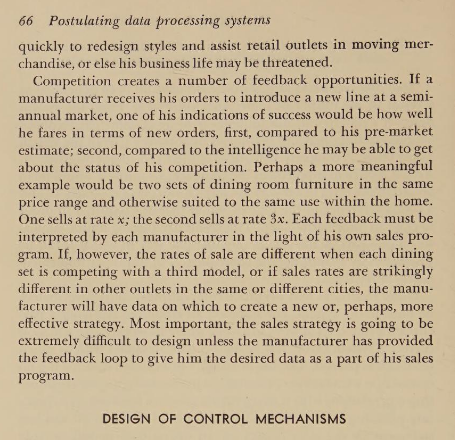
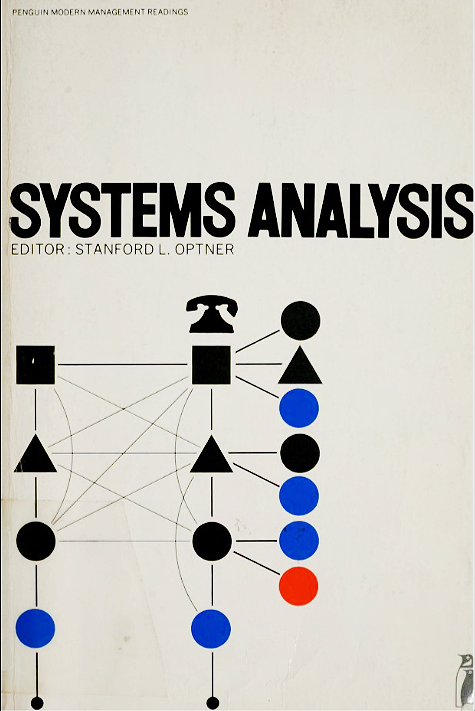
Stanford Optner went on to become a systems analyst, owning his own consulting company and teaching at UCLA. He also wrote multiple books on the subject. Systems Analysis for Business Management (1960) is considered a classic in the field. It introduced a structured framework for applying general systems theory to operational problems. By analyzing data, workflows, and outcomes through practical case studies, the book provided a step-by-step methodology to boost corporate efficiency. It is highly regarded as a foundational text that brought scientific and analytical rigor to the field of business management. Feedback loops were a core topic in his work, and in one book he used an example from a furniture company to compare actual performance against planned organizational goals. He also pioneered the application of a systems approach to urban planning. His key work was the often-cited 1959 report, “The Feasibility of Electronic Data Processing in City Planning.” It emphasized using data systems for planning, input, process, and feedback control in city systems.

After a successful career as an educator and consultant, Stanford retired. He collected art, some of which was donated to the Hammer Museum and the National Gallery of Art. He also traveled extensively with his wife, Ruth. They especially loved their trips to Japan. According to his Los Angeles Times obituary, “They lived life exactly as they wished and had the privilege of a long, happy life together.”
Pacific Iron Products Designers:
Stanford Optner
David Painter, Victor Petertil, and James Teague
Milo Baughman
Paul Laszlo
John Keal
W. Wes Williams
Frank W. Miller
Edward Frank
